Skip to content

Major Thirdsies

The Major Third is probably the most popular interval in America. Everytime you walk into a convenience store, it plays for you.

The Major Third is what makes things Major. In the above example, the E is the Major Third of the C – the Tonic. There is an inherently happy quality to this interval. Babies love it, more than sad-sounding Minor Thirds. Why is this so? Because every tone that you hear, has secret overtones embedded in its timbre. These overtones form a scale known as the Harmonic Series.

If a piano plays a single C, then all of these other overtones, or harmonic, will color the sound of this C, letting you know that a piano is being struck, even if you can’t see the sound source. The Harmonic Series explains why we find certain harmonies consonant and others dissonant. Intervals and chords formed from the lowest overtones will result in sounds that are considered “consonant”. The higher overtones will produce harmonies that are considered “dissonant.” The Major Third is the 4th harmonic in the Series. This is why the convenience store ding sounds happy.

Another ubiquitous use of the Major Third is found in car horns. There is some ambiguity in the example below. The real interval is actually between a Major and a Minor Third, but it sounds happy enough. A car is also in motion, so the doppler shift will bend the pitch down as it passes.

It’s possible a pleasing interval was chosen for the car horn, to help sooth the savage motorist’s road-rage. Honking produces a happy interval, so it is probably more the volume of these car chords that make them come off as noisey rather than musical.

The popularity of the Major Third is due to one song – Wesminster Quarters – the bell song that tintinabulates twelve times a day. The Major Third marks the passing of each hour.

Though the Major Third is a happy interval, too much of a good thing can be bad. When you stack two Major Thirds on top of each other, you get this very evil sounding chord, known as an Augmented Chord.


Evil aye? The augmented chord leaves you dying on the side of a mountain. (For more, see the Pi Tone.)

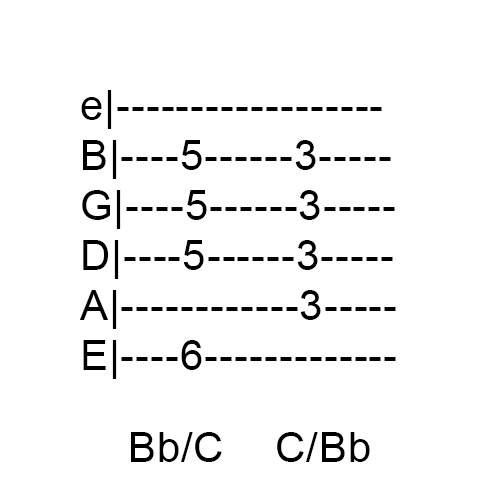
What happens when you combine a Major and a Minor Third into one chord? You get the Hendrix Chord! The Hendrix chord is found in the Modern classical period, blues, and jazz, but Jimi ripped the shit out of this chord. Some chords need to be played on guitar.

You can hear this chord used in Purple Haze.

Bonus Trivia: A misheard lyric, as in “Excuse me, while I kiss this guy” is called a mondegreen.

So there you have it. Major Thirds are the Happy Interval. But too many of them leads to Evil. Combine a Happy Major Third with a Sad Minor Third, and you get Rocked hard.

Kittyboard

I’m on da green.

Key Change Songs

key changes


Most pop music, and music in general, centers around a single note – the Tonic. In solfège, the tonic is called “doe, a deer”, as in “do-re-mi-fa-so-la-ti-do!”, or as musician’s like to call it “12345678!”.

The tonic is like the King of a Key. Everything centers around her. All other notes lead to her. That is why she’s also called The Root. Key changes are a way of usurping the king and replacing her with another; a new king and a new key. If the pervious key was well established, then the key change will provide a revolutionary rush in its first moments. After the new key is established, and the memory of the old key fades, then it must be time to change that key again. A song that is constantly changing keys as a principle embedded in its harmonic movement is known as a “Key Change Song”, or an “Endlessly-Modulating Joint”.

Before we hear a few examples of Key Change Songs, let’s look at the classic pop modulation. A fine example is found in the Big Bird tune Easy Goin’ Day. At 1:35 is when the key change occurs. After two verses and two choruses, the song jumps up a whole tone up from B-flat Major to C Major. This is the classic pop key change that drops hard at the very end of a song. The last chorus has a fresh face, like a brand new ruler put into power. But the new key change’s time is short, for the song promplty ends after one last modulatory hoorah. (Here’s the video link too, if the visuals don’t interfere with your ears.)

I’ve got a sweet tooth for Dolly. Check out her song Islands in the Stream with Kenny Rodgers. This song begins in C Major, plays itself out for a verse and chorus, then mysteriously jumps down six steps to Ab Major at 1:32. This seemingly downward modulation, actually pushes the melody lines up when Dolly takes over Kenny’s part. O to the MG! Does somebody want to do this song with me karaokely?

Those two songs above feature Key Changes as an exhilarating musical device, as a one time modulation, but what if the whole song is constantly modulating, as a feature of its harmonic movement? The song Ant by They Might Giants is one such song. This is a quintessential Key Change Song. With each verse, the song moves up a semitone. It begins on A Major, with the solo marimba, then jumps to Bb Major when the guitar enters (00:23), then up to B with the full band kicking in (00:46), and jumps up twice more to C(1:07) and finally C# Major for the very last verse (1:28). This song basically relies on an old folk trick, that says that if a song is going to have innumerable verses, that are basically the same, then it’s best to change key for each one, so they’ll each feel like they’re new. A semitonal modulation generates a lot of excitement, as two Keys a semitone away have the fewest notes in common of any major keys. For instance, in the song “Ant”, the A Major in the 1st verse has “A B C# D E F# G#” as its scale, and the second verse in Bb Major is “Bb C D Eb F G A”. That’s only two tones in common, the “D” and “A”, which makes the two keys fairly unrelated, and assertive of their own tonics (A and Bb, respectively). It’s like two Kings, with two completely different styles, vying for power.

Another Key Change song comes to us from the 1960’s, by duo Zager and Evans, with their apocalyptic one hit wonder In the Year 2525 (Exordium and Terminus). This song is a lot like “Ant” above. It changes keys with the passing of the years, following the same chord progression raised a semitone. In true 60’s fashion, the song fades out abruptly.

One more irresistible Key Change song is These Eyes by The Guess Who. Unlike the previous two examples, the onslaught of Key Changes comes at the choruses (“These eyes…”).

Wooh! That was the most loquacious post yet. There were more words than noteheads. And I don’t think I cursed once. Soon, they’ll have to start teaching this shit to kids.

If any of the above seemed of the over-yo-head variety, too esoteric and erudite, or just plain obssessive and nit-picky, might I refer the inquisitive reader to the mission statement of this blog. The purpose of these writings is to actually talk about the Music, which involves a written language that is as dead as Latin. Through the use of examples, sound widgets, and metaphors, I think the thrust of this or any post on this site can be gotten, gisted, or vaguely impressed upon any open mind out there. Y’know Beginner’s Mind?

Besides, Key Changes are felt deep down inside, in the cockles, in the penetralia, and only after they are felt do we bother to assign a little number or letter to them.
Peace out homeys!

Warp Whistle

Example 1 showcases the “Warp Whistle” melody from Super Mario Bros. III written by the 8-bit shogun Koji Kondo.

This little leitmotif will sweep your Sprite away in a mystikal tornado to the Warp Zone. It begins on a D tone, goes up a whole tone to an E, then jumps up to another D an octave higher, and from there it descends chromatically to a B. Very tasty!

Let’s Rock ‘n’ Roll tonight at Cab’s in New Paltz. We’re gonna get warpy.


warp whistle

Secret Mystik Licks

Today, we’ll take a look at melodies from classic NES gamepacks.
The one below is written by Koji Kondo for The Legend of Zelda (1986).

This leitmotif plays anytime your Sprite finds a secret passage or acquires a secret item in the game. It consists of two tetrachords. Drag over them below.

The first tertachord (G F# D# A) is an incomplete chord, lacking any real identity. It can either belong to the G Harmonic Minor scale, or to a G Whole/Half scale. (This latter scale is found in the green keyboard with the rabbit at the top right of this website.) The second tetrachord is an E Augmented. An augmented chord is composed of Major Thirds – the happy interval that greets us when we walk into convenience stores. However, when you put two Major Thirds together, they make a very evil-sounding augmented chord.

A similar leitmotif is found in Wizards & Warriors (1988) by Dan Owsen. This melody plays whenever your Sprite enters a door. It’s reminiscent of a “Bill & Ted” handshake.


This riff is pure E Minor Pentatonic. Y’know, Jimi?

There ya go. Two secret mystik licks from when we were young. Now we can rock the shit out of them.

Stridulations

If the woods were a jam, the crickets would provide a high-pictched pedal point with their incessant chirping for the birds to solo over.

Crickets chrip all around a D tone. If you drag the mouse back and forth over the score above, you can get a sense of what a field of crickets sound like. They create a drone that encompasses the length of a semitone, centering around a D.

The lickety triplets of the katydid will serve to percuss the crickety chorus. Drag over this onomatopoeic insect’s slick little rhythm.

We can even throw a cicada solo on top to complete our North American insect jam. Rev up a few of these 64th-note shredder melodies that jump around chromatically (semitone by semitone).

Like any jammers, insects are engaged in a feedback loop. The natural amplification of their stridulations distorted our ears for centuries and probably motivated human beings to want to rock even louder. Along with lightning, they also heavily influenced the development of electronic music in the creation of simple sine wave timbres. Most importantly, insects provide the key note to birdsong, as well as minimalist percussion admist the open-air ambience.

So please be kind to your insect brothers and sisters! Take a moment and jam, using the cricket drone, katydid triplets, and cicada solo. Happy dragging!