Skip to content

The Loudest Bird in the World

Here on Los Doggies Dot Com, we’ve blogged about birds. We’ve blogged about the loudest note in the world and the Emergency Broadcast Signal. Now it’s time for all three—the loudest bird in the world that sings an annoying set of tones like a FEMA alert.

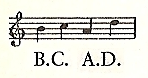
The White Bellbird has recently gone viral for his stentorian song measured at a ridiculous 125 decibels, louder than a rock concert, loud enough to wiggle the wattles around your throat. He’s got a nice wattle (pictured above). I’d go insane with that thing flapping around my face, but the females seem to like it distended.

This song is also for the females, and they like it loud and in their face. Click on that score down below and let the noteheads tell you about it.

The bellbird song is two notes long—an F#6 that resolves up to a B6. This is the perfect cadence at its most perfect. Every TV show theme ends with this interval. The lyrics to the song are “kong-kay,” because the first ornithologist to write about it gets to attach their own onomatopoeia.

When a female gets close, the bellbird sings the first tone with his back turned, then swings his body around to the right, always the same direction, like Zoolander, to blast the second tone into the female’s face. In other words, they cadence in the face.

Is there any better mating call than screaming into a woman’s face?

Recorded music has been steadily increasing for a century. The bellbirds are also in the midst of their own loudness war. The louder he gets, the shorter his tones. It is women’s want. They will dictate how loud and short it can go. The bellbird’s song is notated above as a half-note and a quarter, but if things keep getting louder, they’ll evolve into hemi- and semiquavers, eventually hemidemisemiquavers at quadruple forte (𝑓𝑓𝑓𝑓).

As songbirds go, there certainly are prettier tunes than the bellbird’s. It’s a little ridiculous to make that kind of sound no matter what species you are.

Hands Off Melodies

Whenever the people sing in the streets, Los Doggies Dot Com is there to investigate. Years ago we covered the Occupy protests and the Women’s March. Recently, our intrepid musicologists went down to the City (what people from New York call “Manhattan”) to cover the Hands Off protest—a giant parade where you could get your kum-ba-ya-yas out.

For weeks the NGOs put out the call to action, calling for all arrhythmic people to show up armed with the loudest percussion instruments—tambourines, shakers, cowbells—and play them out of time. As usual there was no hand-clapping, not on the ones or any beat, because clapping is ableist and above all, drummist.

Despite the lack of a definite beat, there were plenty of melodies in the air, including the old standbys like “Hey-Ho” and “The People United.” An indie anarchist polka band farted around Madison Square Park (masked up of course). One particular song stood out to us, the popular call-and-answer, “Shut it Down.”

“Shut it Down” goes to half-time feel on the 3rd bar, which is very hardcore. Even without a beat, you can imagine how a metal drummer would feel it—crash cymbals and all.

The key is probably supposed to be F# minor pentatonic (F# A B C# E), but the minor third from the root is so irresistible that the singer hits the D# (borrowed from Dorian), which is pure fusion to our ears. It would sound good over a i IV chord progression. Real trap shit.

Minor thirds are the go-to interval for sports chants and playground teasers. If you want to bridge the gap between the spoken word (or shouted word) and what could reasonably considered a melody, the minor third is the way to go.

Stay tuned for more protest coverage from the street team here at Los Doggies Dot Com.

Yankees Melodies

I recently attended a sportsball game for the first time in years and it was quite the hypersensory experience. Yankee Stadium hit different. The musical score of the game wasn’t limited to a Hammond organ played live from the organist’s nest (right beside the sniper’s nest). Now the Yankees music director has a whole soundboard full of samples at his disposal.

There were the old standbys like “Charge!” and “De-fense!”, the familiar “S-A-T-U-R-D-A-Y” claps and “We Will Rock You” stomps, but most of the soundtrack was filled out with 15-second clips of modern pop music, as if controlled by an iPad kid on shuffle mode. The stadium volume, like modern movie theaters, was tinnitus-inducing.

One particular melody stuck out, an ancient earworm from Long Island.

The P.C. Richards “Whistle” is played for every away team strike-out. It brings a smile to us Gen X boomers in the stands. We can’t help but think of the jingle, subvocalizing the lyrics, “At P.C. Richards.” I’m not sure if this store chain even exists, but the posthumous jingle plays on, a bluesy mix of thirds that resolves on a G.

When the Yankees strike out however, there is only silence and despair. Fathers cry into helmets filled with melted cheese. Mothers clutch their jersey-swaddled infants. Zoomers hold their broccoli heads and ask God, “Why, dawg?”

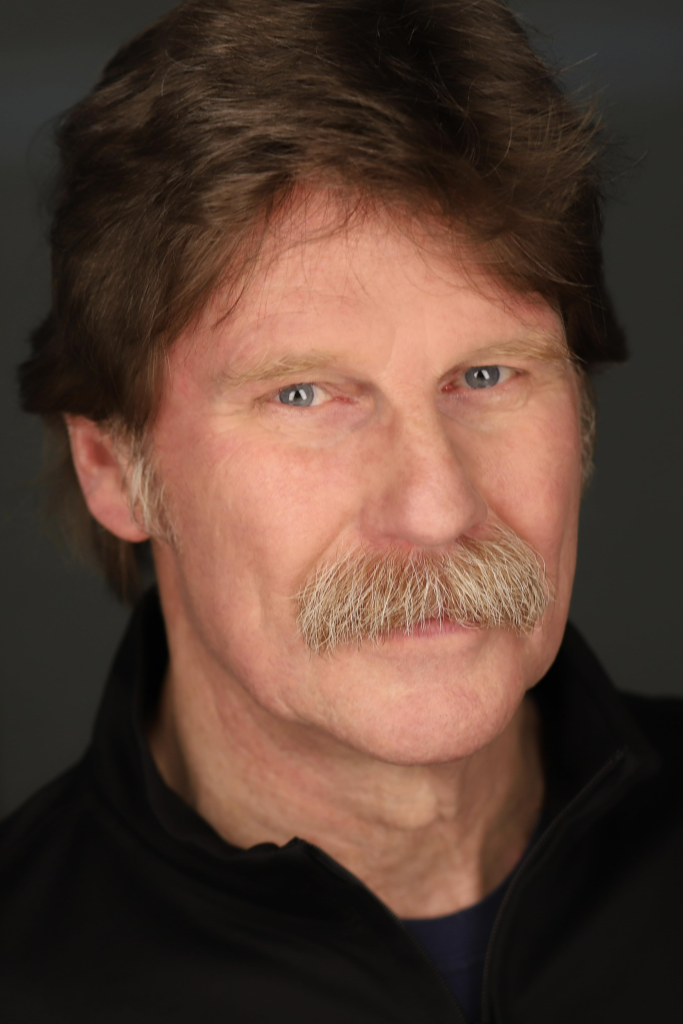
The “Whistle” was written by VO artist Leer Leary. How nice it must be to have written an immortal melody! The Mets started copying the Yankees and using the whistle for their strike-outs. On a long enough timeline, nobody will remember the lyrics to P.C. Richards, and the whistle will be associated with scalawags whiffing.

So here’s to you, Leer Leary, my king. As jingles go, the whistle is nonpareil. It’s right up there with “Take Me Out to The Ballgame” and Mattingly’s moustache.

Leer Leary

Emergency Broadcast System

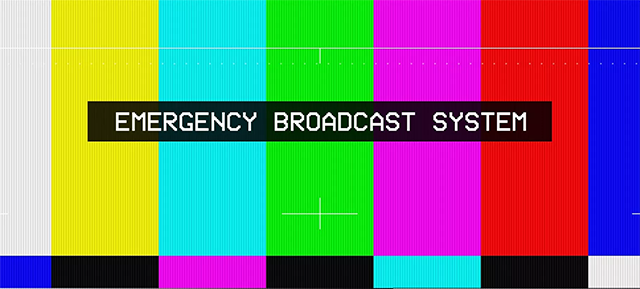
Today my whole dwelling shook like a bowl full of Mexican jumping beans, which I assumed was a hallucination until I heard the belated tones of the the Emergency Alert System.

Did we just get HAARP’d? Have the Nephilim returned? No, it was just a rare and mild New York earthquake that got us Yankees shook.

The Attention Signal used to be played on late-night television. A mysterious man with a transatlantic accent would explain, “This is a test…this is only a test.” There was even a jingle. The Cold War was raging and we expected the Russkies to invade us at any moment, parachuting down like Tetris pieces as seen in the movie Red Dawn.

The EBS is now called the Emergency Alert System because no one watches TV anymore. That name doesn’t sound quite as good, but nothing does. Thanks, Biden. At least they kept the same tones.

Two sine waves sounding together make up the Attention Signal—853 hz and 960 hz. The interval was chosen for how annoying it is, so Americans would take heed. Click on the score and despair!

Just look at that mess of accidentals, markings, and noteheads. I tried to make it as annoying to look at as it sounds. The Attention Signal is two tones, roughly a half-flat A and a half-flat B, creating a dissonant whole tone interval.

Forgoing the alarm bells and war horns of the previous ages, the Attention Signal heralded the electronic age with its pure sinusoidal waveforms. Now that Cold War 2.0 is back in full swing, I expect we’ll be hearing more of these dreadful tones. Time to break out my schoolboy desk, so I can scurry underneath and hide from the Soviet tetrominos.

Vanilla Video

We’ve finally caught up with the times and turned overwrought bloggies into easily digestible videos. Here’s the latest on the age-old Vanilla Ice vs. Queen controversy. We, of course, side with the former.

Tyson Video

Yodel-Ay-Ee-Oooo

Yodeling was inspired by donkeys. Bored shepherds in the alps needed a way to pass the time and found inspiration in their asses. They sang to the mountains with donkey voices and the mountains sang back, or another yodeler, or a donkey.

Yodeling is one of the manliest forms of singing. You start with your chest voice and then move up to your head voice and back down to your chest voice. It is very sexy.

The classic yodel starts on the 5th, goes up to the major 3rd, and then down to the 1, like a doorbell. The vowel sounds ah, oh, and oo are usually sung with the chest voice, while ay and ee are in falsetto.

The classic donkey bray also involves a jump from chest to head voice. Beginning high on the “hee,” down to the “haw” and back up again. This donkey brays in a perfect octave of Cs as if bred for pedagogy.

Yodeling is well-suited to every kind of music, especially progressive rock. My favorite band Focus features yodeling in their 1971 hit “Hocus Pocus.” Focus is the greatest band ever and “Hocus Pocus” is the national anthem of the Netherlands. Donkeys should be proud of the music they’ve inspired. Horses can’t compete.